Showing posts with label books. Show all posts

Tuesday, 10 June 2014

reading & growth & change: some navel-gazing.

source
It's been around five or six years since I started this reading thing seriously. Reflecting upon the contents of each book, turning the filter of my mind to active instead of passively letting the words slide through, letting them fall where they may without thinking too hard. It doesn't feel as if much about my processing method has changed — but at the same time, I myself have changed tremendously, in the ways that count: principles, ways of thinking, outlook on life. And this revolution of self finds echoes, I find, in the way and the things that I read.

Backing up a bit: the change effects itself in the other way as well. What I read changes what I think and how I am, and that thus leads to more changes in what I read or choose not to read. In fact, I think my reading reflects myself in a parallel, mirroring fashion, rather than a cyclical, directional manner. So, although my reading and my change may be catalysts for each other, at the same time they are also firmly interlocked.

I'm intrigued by this concept, actually — how important it is to me that my reading meshes with the principles that I come to hold. It has to do with art imitating life, the possibility of fiction as an alternate universe of reality, I think. Because I have discovered this new way of processing life, I don't know if I can go back. I've changed.

What does this mean for my reading? Quite a few things. It means that I participated with joy in #WeNeedDiverseBooks (check out the Tumblr. Go on!); it means I angry-tweet about stereotypes; it means that now, I relegate books to the did-not-finish pile with sass, immediacy and aplomb. My reading tastes are changed, along with myself. Perhaps they are more specific, more demanding, but perhaps they simply reflect my reality now.

The age category + genre mix of young adult contemporary is halfway to a minefield for me right now. By virtue of the genre's definition, the immediacy of the action and the storyline and the characters means that if the book's characters do not reflect the diversity and variety that I've come to expect, then the reading experience becomes an intensely grating one. I don't want to read about a reality where the important people are white.

For some reason, removed genres under YA such as fantasy/sci-fi, historical and steampunk give me less problems, and I've yet to discover whether it's because the genres allow my sense of reality to relax, or because the genres themselves lend to greater diversity.

But where my true refuge lies is in an entirely different age category. Middle-grade is my safe place, the place where the possibility to be triggered negatively is at its lowest, where the books talk about themes that tug on feelings that I thought I'd lost in my revolution of self, in my changes of mind. It is — these books are — simultaneously nostalgia and hope for the future. Hoping that the future can still be what I thought it would be.

I've grown, now. These changes are here to stay. But so is my love of reading, my love of books, my love of writing. So they must all change with me.

Thanks for reading. ♥

-Eden

Sunday, 23 June 2013

top five: non-human characters

Human characters have it easy: we as readers relate to them immediately to some degree because they're, well, human. But it takes skill on a writer's part to turn a non-human character into a hero. And when they do, I love it. Like, seriously love it. Read on and you'll see. :D

5. Grimalkin, The Shadow Dragons by James A. Owen

This cat has historical, mythical, magical and legendary secrets pouring every which way out of him. In the series (the Imaginarium Geographica), he has symbolic and physical importance, and he represents betrayal, ancient history and the most fantastic of the fantastical to the main characters. Grimalkin also spouts riddles at every turn, confounding almost everyone who speaks with him, which makes him that much more entertaining to read about.

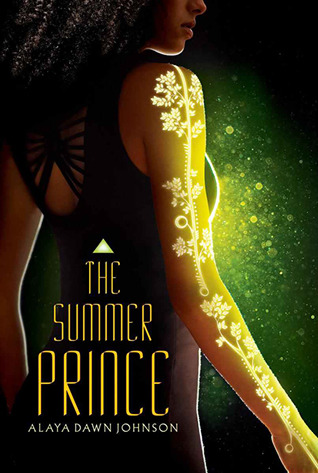
4. The city, The Summer Prince by Alaya Dawn Johnson

The only reason the city isn't rated higher is because we don't get enough of her! Alaya Dawn Johnson's fantastic world is entwined with the city of Palmares Tres, and the city herself is sentient. She's fully aware of the divide between the poor in the verde and the rich in Tier Eight to Ten, and she's wise but distant, caring but omniscient. And when she becomes intricately tied to one of the main characters in this book, well, let's just say I had my heart broken a little.

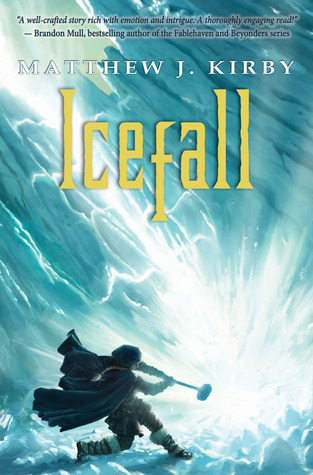
3. Hake, Icefall by Matthew J. Kirby

Pride and brutality define Hake. His battle prowess and confidence as captain make him easy to admire, but it's when his power and vulnerability are juxtaposed that his character is completely endearing. Add in that loyalty that makes him strong from the core, and he makes for a fantastic friend too, even as he tentatively reaches out to the protagonist.

2. Taggle, Plain Kate by Erin Bow

If Taggle didn't make you laugh, snort, grin like crazy and then cry, then you have no heart. I'm serious. This cat is written more haughtily than your fourth-year English university professor and yet when it comes to Kate, he's a total softie. That juxtaposition completely won his way into my heart, and when he makes that sacrifice for Kate... ugh. Pass me the tissues.

1. Tool, The Drowned Cities by Paolo Bacigalupi

Though he makes his initial appearance in the companion prequel Ship Breaker, Tool comes into his own in The Drowned Cities—and boy does he take the stage. He wields his half-man, half-dog/cheetah/jackal/etc. status bitterly yet proudly, and his outlook on life and survival in Bacigalupi's harsh world is unflinching and effective. He's kickass, in other words, and when his vulnerable side comes out (which is nearly never), he'll make your heart melt.

(And, if you're me, he'll have you going "don't go Tool please I love you don't go don't go"—but. You know. That's just me.)

Tuesday, 26 February 2013

not-so-original premises: book ideas already written

Remember everyone heralding Across the Universe as a supremely original sci-fi with an unguessable twist?


Meet Dom Testa's Galahad series, the first of which was published in 2004 -- seven years before ATU came out. Compare the summaries of Across the Universe and The Comet's Curse, and you'll see immediate similarities. And having read both, I can tell you that the similarities run true in the book. Teens get launched into space, in charge of a spaceship being sabotaged, while in the background medical science is developed.

And yes, I guessed the true antagonist from the moment he was introduced.

I'm not bashing or defending the books; my goal here is to point out that no idea is truly original. So when you're lauding a book, saying it's got a fabulously original premise is not the way to go.


Some more examples:

Veronice Rossi's Under the Never Sky (2012) and the MG dystopian A Crack in the Sky (2010) by Mark Peter Hughes (click titles to see Goodreads summaries).


I've read both these two as well, and I can tell you -- the worldbuilding (which was one of the main the selling points of UTNS around the blogosphere) is almost exactly the same: protected pods amidst a barren wilderness, using a grand disillusionment on the protagonist's part to fuel the central conflict. Click through the links up there to see the summaries, guys. See for yourself.


And finally, one forthcoming book that I haven't read compared with a classic: Eve Silver's Rush (2013) and Monica Hughes's Invitation to the Game (1991).


Click through, read the summaries, and tell me if you don't see a resemblance.

From my perspective, these matching premises are usually only a big deal or worth noting if the book is high-concept; contemporaries, for example, often bear similarities, which is to be expected. But the trouble starts once a premise's apparent originality becomes a selling point of a novel. In the end, we need to judge and promote books based on their actual quality. After all, a good premise never makes up for poor execution.

Wednesday, 9 January 2013

top five: books to reread in 2013

Idea shamelessly stolen from Chloe @ YA Booklover Blog.

Some books only sink in on the second time around. Some books are the perfect kind of pick-me-up for any time. And some books are so good you just have to read them again. So here are my top five books to reread in 2013!

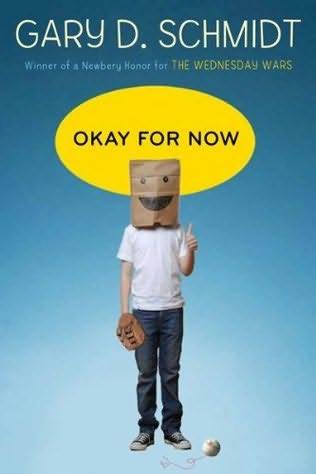
5. Okay For Now by Gary D. Schmidt

This book is heartwrenching. There are so many truths in the story but also so much emotion that can only be truly understood and parsed through on multiple read-throughs; it's like you empathize so much more what Doug goes through once you see his actions through a different filter. Also, I want to see if I cry this time around.

4. Third Transmission by Jack Heath

The first time I read this, the ending stopped my heart. It blanked out all other impressions I formed, and so I definitely need to reread and appreciate all the action and secret plans. And this time round, I'll be prepped for the twist ending. And maybe I won't toss the book on the floor in despair. Maybe. Probably.

3. Five Flavors of Dumb by Anthony John

My favourite contemp of all time. :) I'm excited to reread and watch Piper's relationships form with the band and Ed and also read all of the scenes involving Finn, who's basically the best fictional younger brother ever. This book talks about girl power and parents and sacrifices, and it does it all supremely.

2. Ender's Game by Orson Scott Card

I read this in 2012, and oh. my. lord. Mind-blowing. And so, so, so sad. Rereading this one is going to be an odyssey of a journey; all the themes and questions I talked about in my discussion post for Ender's Game are going to crop up again and there won't be any new answers and this will wring my heart out of my chest. I know.

1. The Summer Prince by Alaya Dawn Johnson

This book comes out in March 2013, and I'm definitely going to need to reread it before writing a review. It's colossal. Not in terms of page count, but it's so ambitious in worldbuilding and themes, and it SUCCEEDS, guys, it succeeds. The execution is so wondrous that the world feels real; the characters are so multi-faceted, in fact that I'm a little bit scared of them. I kind of want the whole world to read this book.

Thanks for reading! Do you have any rereads in mind for 2013?

Monday, 1 October 2012

bookmarks: (how) do you use them?

A genius way to make cheap and colourful bookmarks: paint chips!
I use bookmarks. I use bookmarks like the Type A person I am. Bookmarks must match the size and proportion of the book they're in; stiffer bookmarks go with hardcovers, while flimsier ones go with paperbacks. It's all to ensure that flipping open to my spot in the book is easy peasy, because nothing annoys me more than putting the book down, picking it back up later and flipping madly through attempting to locate the one page.

(Plus, people who dog-ear the page? HORRENDOUS SHUDDER. I could never bear to defile my books that way.)

This means I need a variety of bookmarks. And when all the hardcover-sized ones are "checked out", I'm forced to use smaller, skinnier ones for big books. So I end up improvising bookmarks.


I start out with perfectly normal bookmarks like those pictured above. But then I start grabbing for whatever's proportionate, firm and available:


Yes. That's two make-up adverts, a thank you card and a sticker sheet. I've also used postcards and expired bus passes. Hey, if it's made out of card stock, I'll use it. But only with the appropriately-sized book, of course.

What about you? Do you use bookmarks? And if so, do you discriminate? :P

Thursday, 30 August 2012

judging books by their covers: why not?

Look, I think it's time we stop with all the self-shaming when we admit that we *gasp!* picked up a book for its cover. There are a few certain Things We Know about books and their covers:
  1. Authors do not always have their say in their covers. Which means that
  2. their covers do not always reflect the book they wrote. However,
  3. the cover designer is being paid by the publishing house to design their books covers. Therefore,
  4. book covers should be judged... but in terms of the publishing house and designer, not the author.
See, publishers want that "I bought it for the cover" reaction. It's part of how they sell their books to consumers. Thus, they pay good money to a designer to create a book cover that hopefully fits the book. It's part of the publishing process, just like editing and marketing & publicity are part of the process -- and editors and publicists get paid, don't they?

So don't you see? It's perfectly fine to judge a book's publisher or designer by its cover. Which means it's perfectly fine to say, "Wow, this cover SUCKS." Or, on the lovelier side, "Holy donkey can I please have this cover framed I'mma tweet the publisher until they make posters K". The key to this is not judging the actual content by the cover.

But got violent vehement must-be-expressed thoughts on the cover? Go ahead and express them. You're allowed to, you know. (Not that you should need my consent to judge.)

A few attractive covers (this all being incredibly subjective, of course)...


And a few ugly covers...


So how do you judge covers?